
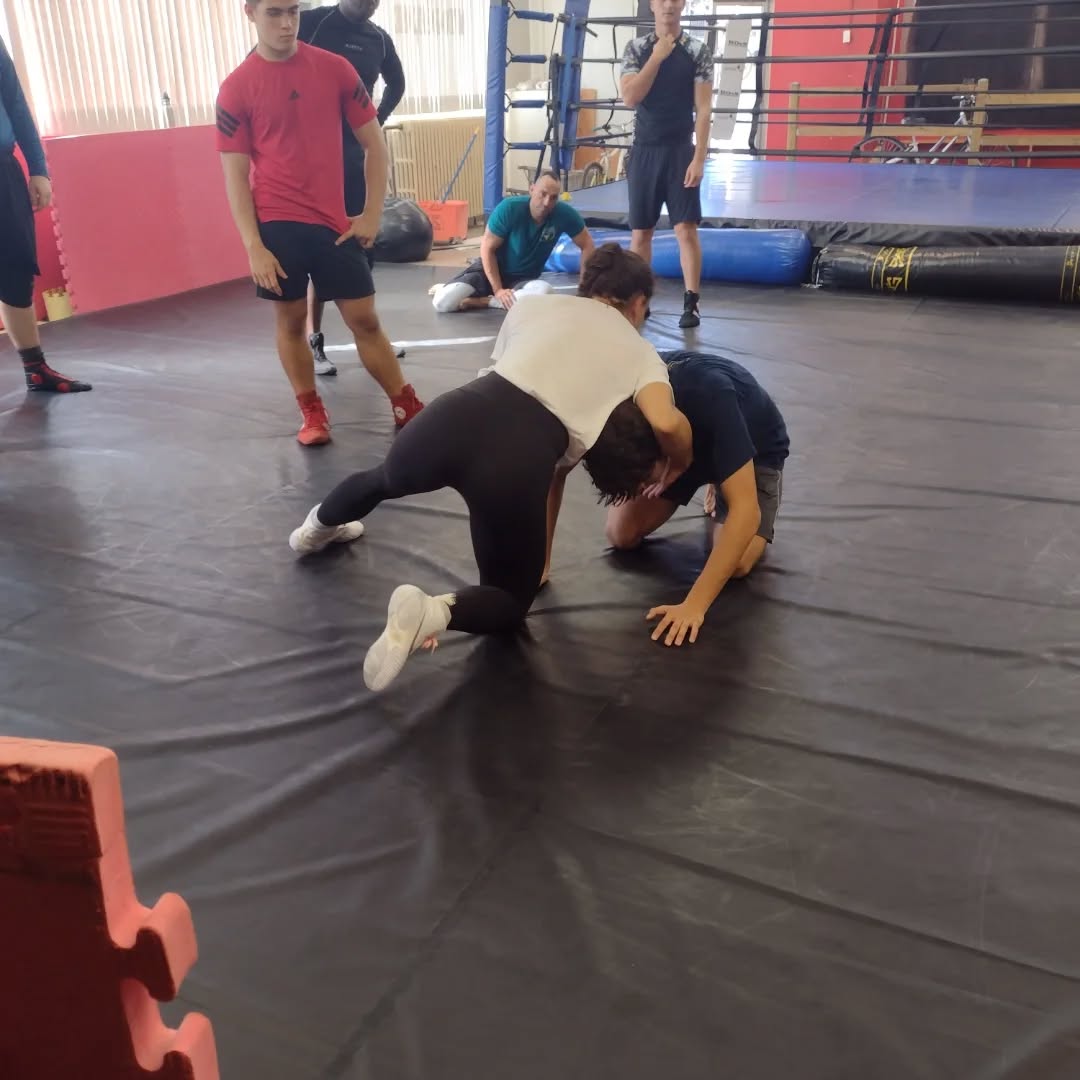
Equipment needed:
Olympic wrestling is a traditional and highly competitive combat sport that has been a cornerstone of the Olympic Games since ancient times. It is divided into two primary styles: Greco-Roman wrestling and freestyle wrestling. Both disciplines emphasize technique, strength, agility, and strategy, but they differ significantly in their rules and permissible moves. Greco-Roman wrestling restricts holds below the waist or using one's legs for attacking, focusing on upper body techniques such as lifts, throws, and clinches. Freestyle wrestling, on the other hand, allows the use of the legs to attack and defend, enabling moves like single-leg and double-leg takedowns.
The sport's origins can be traced back to ancient Greece, where wrestling was considered a fundamental skill for warriors and was celebrated in the original Olympic Games. The Greeks believed wrestling embodied physical prowess, mental discipline, and moral integrity. Modern Olympic wrestling, reintroduced in the 1904 Olympics, continues this legacy by showcasing athletes who balance technical mastery with physical endurance.
Training for Olympic wrestling is rigorous and multifaceted. Wrestlers must develop exceptional cardiovascular endurance, explosive power, and flexibility.
Match formats in Olympic wrestling are structured to test both stamina and strategy. Competitions are divided into rounds, with points awarded for takedowns, reversals, and exposure of an opponent's back to the mat. A match can end early if a wrestler secures a pin or achieves a technical superiority lead. The scoring system encourages dynamic and aggressive wrestling.
Many current MMA fighters include wrestling in their training regime.
Olympic wrestling is not just a sport, if applied properly, it can also be used effectively in self-defense.